Dental Restoration Options: Dental Crowns
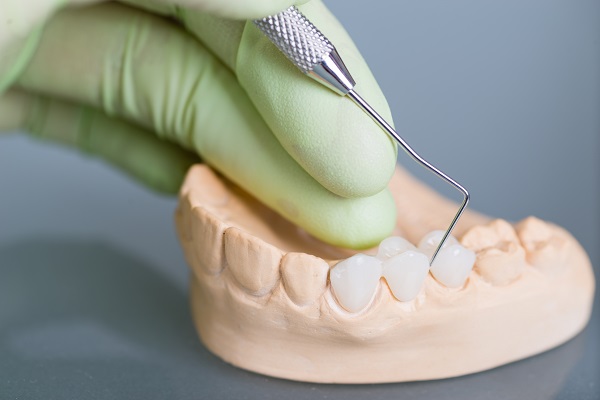
Considering dental crowns for a restoration? There are a number of dental restorations that can be provided by a general dentist, however, one of the most popular ones is dental crowns. Dental crowns offer individuals strong and reliable restorations that tend to last upwards of 10 years. They provide many benefits, including durability and discreteness. Additionally, there are different options, which cannot be said about other dental restorations.
Dental crowns for restoring decayed or damaged teeth
Below is an overview of dental crowns, including how they are used to restore teeth that are in bad shape. When looking into different dental restorations, it can be helpful to review and carefully consider the following information.
What are dental crowns and how do they work?
Dental crowns are caps that completely cover a tooth. Typically, they are used for molars or teeth that are responsible for chewing and grinding food.
General dentists recommend dental crowns when an individual has a decayed tooth that cannot be repaired through a filling. The dental crown may be used to restore the tooth on its own or after a root canal procedure. Additionally, when an injury occurs resulting in a crack or a chip, a dental crown may be administered to cover the damaged tooth. Dental crowns can also be used in conjunction with dental implants as the final prosthetic, which acts as the replacement for the actual tooth.
After taking impressions of the damaged or decayed tooth, the general dentist will send the molds off to a dental lab where the dental crown will be custom-made. The placement procedure is relatively simple and painless.
Options
Modern-day dentistry has allowed for the evolution of multiple kinds of dental crowns. Traditionally, they were only offered in metal or gold materials, both of which are still available today. Metal and gold dental crowns provide immense durability and reliability, and they rarely have to be replaced. However, one disadvantage to them is that they can draw attention to the mouth due to their color, which is why ceramic and composite dental crowns were introduced to dentistry.
Ceramic dental crowns are extremely durable, but they are also white in color, which allows for discreteness. Composite dental crowns, on the other hand, are not as reliable, but they are more affordable and can be color-matched to the surrounding teeth.
Benefits
There are many benefits that come with dental crowns when used as a dental restoration. Outlined below are a few of them.
- Strong and durable
- Many different options
- Long-lasting
- Hearty to wear and tear
- Easily repairable
- Custom-made
- Ceramic and composite resin crowns are color-matched to the surrounding teeth, which makes them unnoticeable
In comparison to other dental restorations
Dental crowns are one of the most common types of dental restorations offered by general dentists. They are also one of the strongest and most durable restoration options, as they completely cover and cap a tooth, regardless of the size or shape. Traditional dental crowns are custom made in a dental lab, while other restorations are typically done directly right in-office. This helps ensure a perfect fit, which can, in turn, result in a longer-lasting restoration.
Learn more about dental crowns
When considering dental crowns for restoration, it is best to start with a consultation from a general dentist. Reach out today to learn more or to get started.
Request an appointment here: https://www.drroberttamaki.com or call Dr. Robert B Tamaki, DDS at (310) 402-0156 for an appointment in our Los Angeles office.
Check out what others are saying about our services on Yelp: Read our Yelp reviews.
Related Posts
A dental implant replaces a single tooth with a metal post, abutment, and crown. General dentists recommend prompt tooth replacement because even the loss of one tooth can disrupt a smile's alignment and function. Though there are other effective options, dental implants offer clear advantages for good candidates.Losing only one tooth, even if the space…
Dental implants offer tooth replacement that most closely resembles natural teeth. Due to their aesthetic and functional benefits, they are quickly becoming one of the leading options for tooth replacement. Understanding the basics of the process, including requirements for candidacy, can help patients decide if this is the right option for them.A dental implant is…
Using dental implants to replace teeth can offer clear advantages, such as enhanced stability and longevity, that other tooth replacement options cannot match. For the right candidate, they offer tooth replacements that look, feel, and function like natural teeth. However, there are important things to consider before pursuing this option.A dental implant is a screw-like…
A general dentist completes dental implant plans by attaching a custom restoration that looks and feels like a natural tooth. This visible part of the process is what truly brings a smile back to life after tooth loss occurs. While the groundwork happens below the surface, the restoration handles the daily tasks of chewing and…